What 2025 Taught Me About the Messy Middle—and the Future We’re Building Together
What 2025 Taught Me About the Messy Middle—and the Future We’re Building Together
If 2025 taught me anything, it’s this:
Leadership isn’t tested in the vision. It’s tested in the messy middle—when demand rises, resources tighten, policy shifts land hard on families, and the work keeps showing up at your door anyway.
To my colleagues and partners across the network: I know many of you felt that same weight this year. Most of us didn’t have the luxury of choosing between urgency and strategy. We had to carry both.
This year, demand increased—fast. More neighbors needed support, and the pressure of policy changes only intensified that reality. For many families, shifts in benefits (including SNAP impacts) didn’t show up as an abstract headline. They showed up as a shorter grocery cart, a tighter week, and a harder choice.
At the same time, we were asked to do something that’s harder than it sounds: respond to immediate needs without losing the long view. There were days when the urgent could have consumed everything. But if we only respond to the moment, we risk building systems that depend on the moment. The challenge—and the calling—was to meet today’s need while still investing in the work that reduces tomorrow’s.
And even in a high-pressure year, I’m proud of what we built—together.
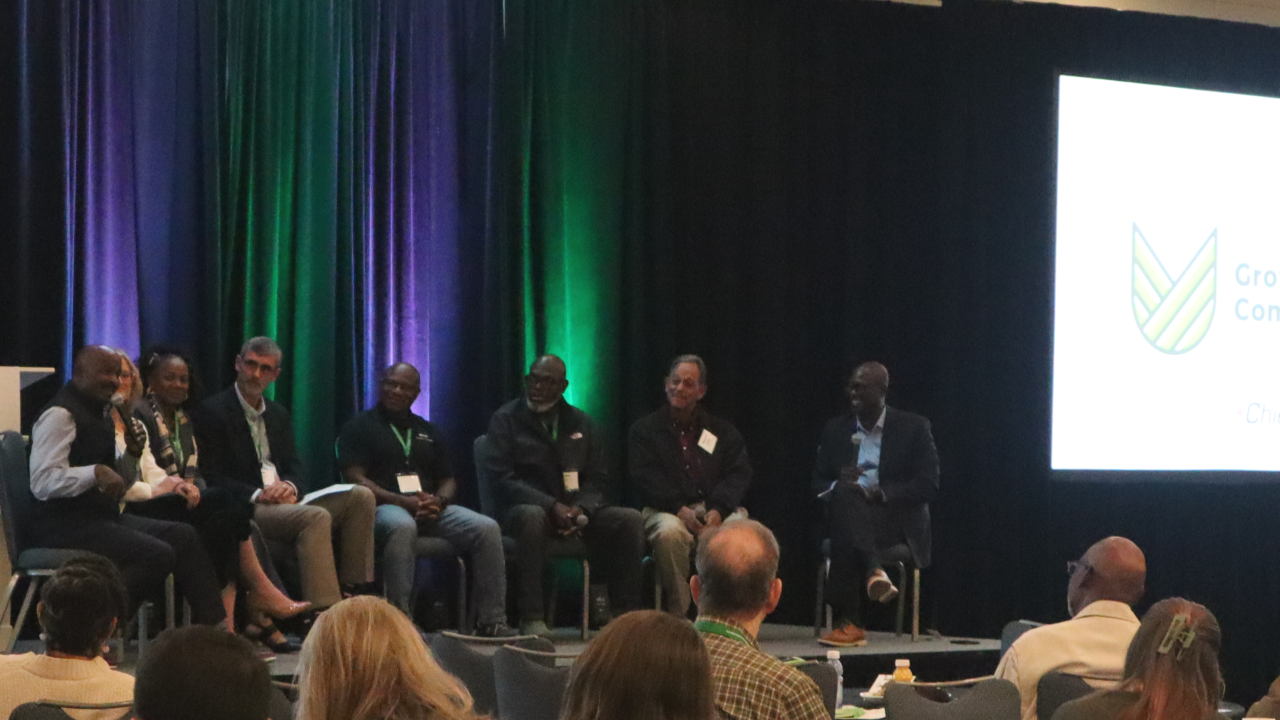
One moment that stood out for me was our first-ever Agriculture Conference, with 28 states represented. That gathering wasn’t just a successful event. It was a signal that our network is ready to expand the conversation from food access to local food systems, resilience, and nutrition security—and to share what’s working across communities.
I’m also proud of the quieter wins that don’t always show up in a headline, but change the trajectory all the same: preserving dignity in how neighbors are served, creating access that is consistent and healthy, strengthening community-rooted solutions, and expanding pathways through skills-building, gardens, medically tailored approaches, and partnerships that don’t just “help,” but shift stability.
Last week, I joined a call with Conetoe Family Life Center, and I’m still thinking about what they shared. They’ve closed an agreement to provide their local hospital with fresh produce for the hospital kitchen. That’s not just a contract. That’s a community building stability in real time. It generates earned income to strengthen their program—and it means that when local neighbors find themselves in the hospital, they’ll be eating local food grown from their own community.
To me, that’s what it looks like when vision meets reality—and reality starts to change. Local agriculture connected to local institutions. Health and food linked at the source. Dignity preserved even in the most vulnerable moments. Community wealth-building woven into community care.
This year reminded me that leadership isn’t only about holding the line. It’s about asking why the line exists—and building alternatives strong enough to replace it. And I believe our network is full of people doing exactly that: innovating under pressure, adapting with integrity, and staying rooted in what matters—neighbors, dignity, and long-term outcomes.
As we step into 2026, we’re leaning forward—on purpose.
We’re expanding the agriculture community through our next conference, building on the momentum of 2025 and growing a national community of practice around sustainable agriculture, nutrition security, and community resilience.
We’re also engaging more corporate partners who want to participate—not just sponsor. Partners like Chiesi have shown what it looks like when corporate engagement becomes relationship, consistency, and shared accountability—not a one-time moment.
And we’ll keep strengthening pathways that create stability—work that preserves dignity, increases access, strengthens local food systems, and expands opportunity through skills, gardens, medically tailored approaches, and deep partnerships, especially those led by community.
If you’re a fellow food bank leader, a community partner, a funder, a corporate leader, or someone working inside this mission every day—thank you. I see you.
And if you’re building models that turn emergency response into community stability, I’d love to learn from you and share what’s working—because the future won’t be created by one organization.
It will be built by communities, and by a network willing to do the hard work of the messy middle.
Here’s to 2026—where vision meets reality, and we keep building.